Life skills are the foundation of independent adulthood, and they develop gradually through repetition, modeling, and increasing responsibility. While academics often focus on structured content and measurable outcomes, life skills are learned through daily participation in real-world tasks.
For homeschooling families, this creates a unique opportunity: children can learn essential skills naturally as part of everyday life rather than in isolation or as a separate curriculum.
This checklist is designed to help families intentionally build those skills over time.
Instead of organizing by age or grade level, skills are grouped by life domain and tracked using a three-level mastery system:
- Introduced
- Practiced with support
- Independent
This approach reflects how real competence develops. A child may be fully independent in one area (such as cooking breakfast) while still learning foundational skills in another (such as managing time or organizing belongings). Progress is uneven, and that is expected.
These skills can be woven into daily routines, used as responsibility-building opportunities, or integrated into slower homeschool days as practical learning blocks. They are not meant to replace academics, but to complement them by strengthening independence, problem-solving ability, and self-management.
Early childhood participation often begins with simple helping behaviors—assisting a parent, observing tasks, or completing small parts of a larger activity. Over time, these tasks shift from shared work to independent responsibility.
For teens, life skills become especially important as they bridge the gap between structured education and adult expectations. Competence in these areas supports confidence, employability, and the ability to manage independent living.
This checklist is not meant to be completed in a linear way. It is a reference tool families can return to repeatedly as children grow, gaining independence in different domains at different rates.
Skill Mastery Levels
- Level 1 – Introduce: The child is learning through demonstration, guided practice, and shared responsibility.
- Level 2 – Practice: The child can complete the skill with occasional reminders or supervision.
- Level 3 – Independent: The child can complete the skill safely and consistently without assistance.
Personal Care & Health
- Brush teeth twice daily
- Floss teeth daily
- Comb or brush hair
- Wash hands appropriately
- Bathe or shower regularly
- Wash and care for hair
- Dress independently
- Select weather-appropriate clothing
- Dress appropriately for activities and occasions
- Eat a balanced diet
- Drink enough water throughout the day
- Develop healthy sleep habits
- Exercise regularly
- Use sunscreen appropriately
- Wear a bicycle, scooter, or sports helmet
- Wear a seat belt every time you ride in a vehicle
- Know emergency contact information
- Recognize when an illness or injury requires adult help
- Perform basic first aid for minor injuries
- Know when and how to call 9-1-1
- Recognize signs of stress and develop healthy coping strategies
- Understand the dangers of alcohol, tobacco, vaping, and drug use
- Refuse to ride with an impaired driver
- Learn safe bicycle riding skills
- Describe symptoms accurately
- Know personal allergies, medications, and medical conditions
- Prepare questions before medical and dental appointments
- Complete basic health history and medical forms
- Schedule medical and dental appointments
- Fill a prescription
- Understand the basics of health insurance
- Speak directly with healthcare providers about questions or concerns
Home Care & Organization
- Vacuum floors (floor and hand vacuum)
- Sweep and mop floors
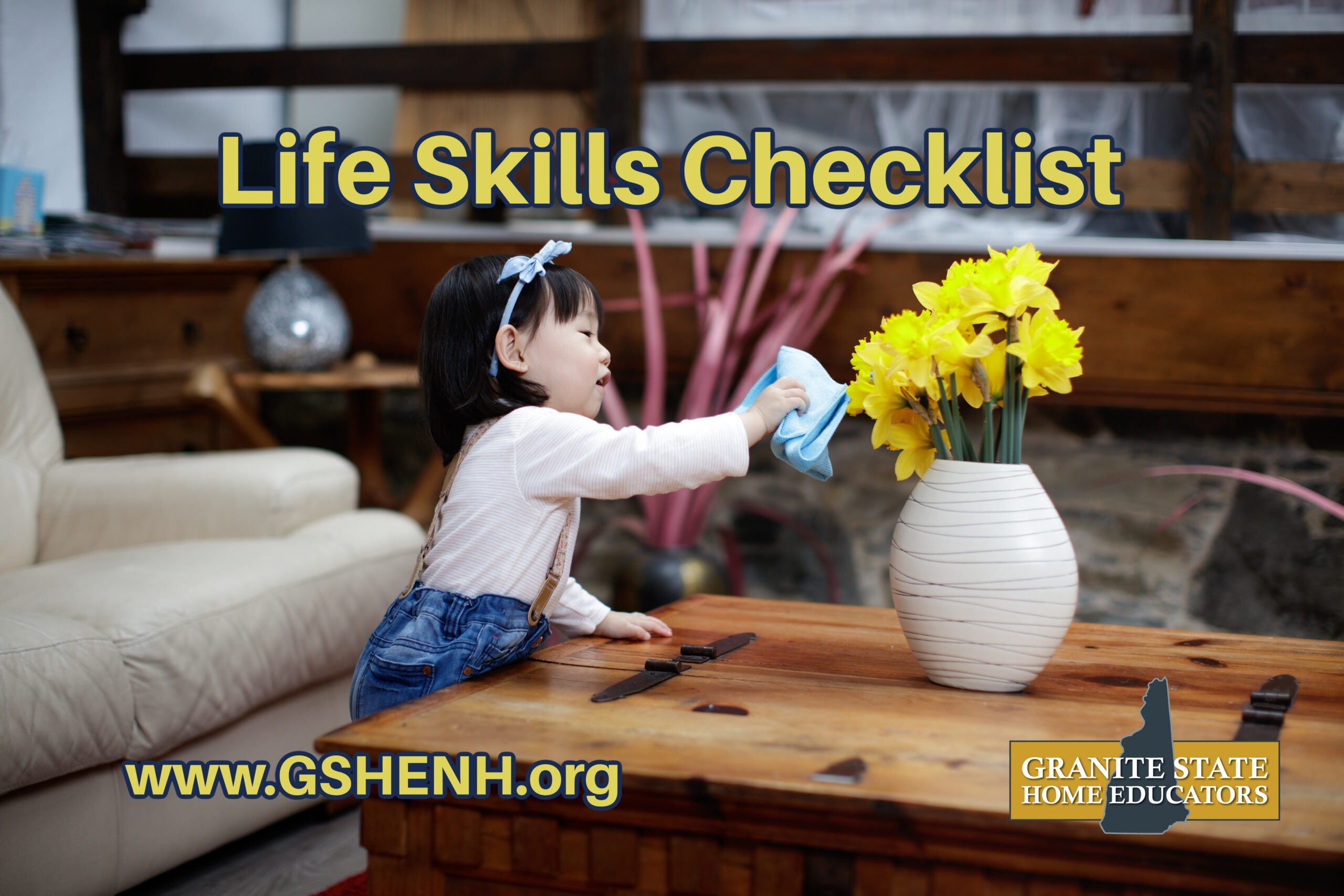
- Dust furniture and surfaces
- Change lightbulbs
- Replace batteries
- Water houseplants
- Hang up coats and backpacks
- Put away shoes and belongings
- Sort and recycle household paper items
- Collect and dispose of household trash
- Replace trash liners
Food & Cooking
- Make a grocery list
- Shop for groceries (compare prices, select produce, check dates)
- Put away groceries safely
- Operate microwave, toaster, and stove safely
- Read and follow a recipe
- Prepare a simple meal independently
- Cut soft fruits and vegetables safely
- Boil water safely
- Make packed lunches
- Store leftovers properly
- Set and clear the table
- Wash dishes by hand
- Load and unload dishwasher
Laundry & Clothing Care
- Sort laundry by color and fabric type
- Load and start washing machine
- Select appropriate wash settings
- Transfer clothes to dryer
- Hang clothes to dry
- Fold clothes and towels
- Put away clean laundry
- Treat basic stains
- Use an iron safely
- Sew on a button
Home Maintenance & Repairs
- Use a hammer, screwdriver, and basic tools
- Tighten or loosen screws
- Hang pictures or wall items safely
- Assemble furniture from instructions
- Change air filters
- Unclog simple drains
- Locate electrical panel and reset breakers (supervised initially)
- Shut off water supply (intro level)
- Perform basic wall patching or touch-up repairs
Transportation & Community
- Navigate neighborhoods safely
- Read maps and use navigation apps
- Cross streets safely
- Understand basic traffic safety rules
- Use public transportation systems
- Call and safely use rideshare services
- Pump gas into a vehicle
- Check tire pressure and add air
- Recognize and respond to unsafe public situations
- Locate and use important community services (library, post office, etc.)
Digital Citizenship & Technology
- Create and manage strong passwords
- Use two-factor authentication
- Recognize phishing and scams
- Understand privacy settings
- Use email appropriately
- Practice respectful online communication
- Identify misinformation and unreliable sources
- Manage digital files and folders
- Use basic word processing and spreadsheets
- Understand digital footprint consequences
Financial Literacy
- Understand needs vs wants
- Make a basic budget
- Save money toward goals
- Count and manage cash
- Understand debit vs credit
- Read a basic bank statement
- Deposit or withdraw money
- Track spending
- Understand subscriptions and recurring charges
- Recognize common financial scams
- Learn basics of taxes and income
Communication, Relationships & Etiquette
- Introduce yourself and others
- Make eye contact and listen respectfully
- Ask for help appropriately
- Apologize sincerely
- Have conversations with adults and peers
- Use appropriate phone and texting etiquette
- Write thank-you notes or messages
- Share and take turns
- Respect personal boundaries
- Resolve basic conflicts peacefully
Emotional Well-Being & Executive Function
- Identify and name emotions
- Manage frustration and disappointment
- Set short- and long-term goals
- Break tasks into steps
- Manage time and schedules
- Follow multi-step directions
- Stay focused on tasks
- Accept feedback and correction
- Make decisions by weighing options
- Practice self-reflection after mistakes
Civic Responsibility & Citizenship
- Understand basic community roles and services
- Participate in volunteering opportunities
- Understand basic government structure
- Respect public property and shared spaces
- Follow rules in public settings
- Learn how to contact local representatives
- Understand voting basics (age-appropriate introduction)
Career Readiness & Adult Living
- Write a basic resume (teens)
- Fill out job applications
- Practice interview skills
- Arrive on time and follow schedules
- Understand workplace expectations
- Complete assigned tasks independently
- Communicate professionally in work settings
- Learn basic workplace problem-solving
- Understand paychecks and employment basics
- Develop responsibility for long-term commitments
