
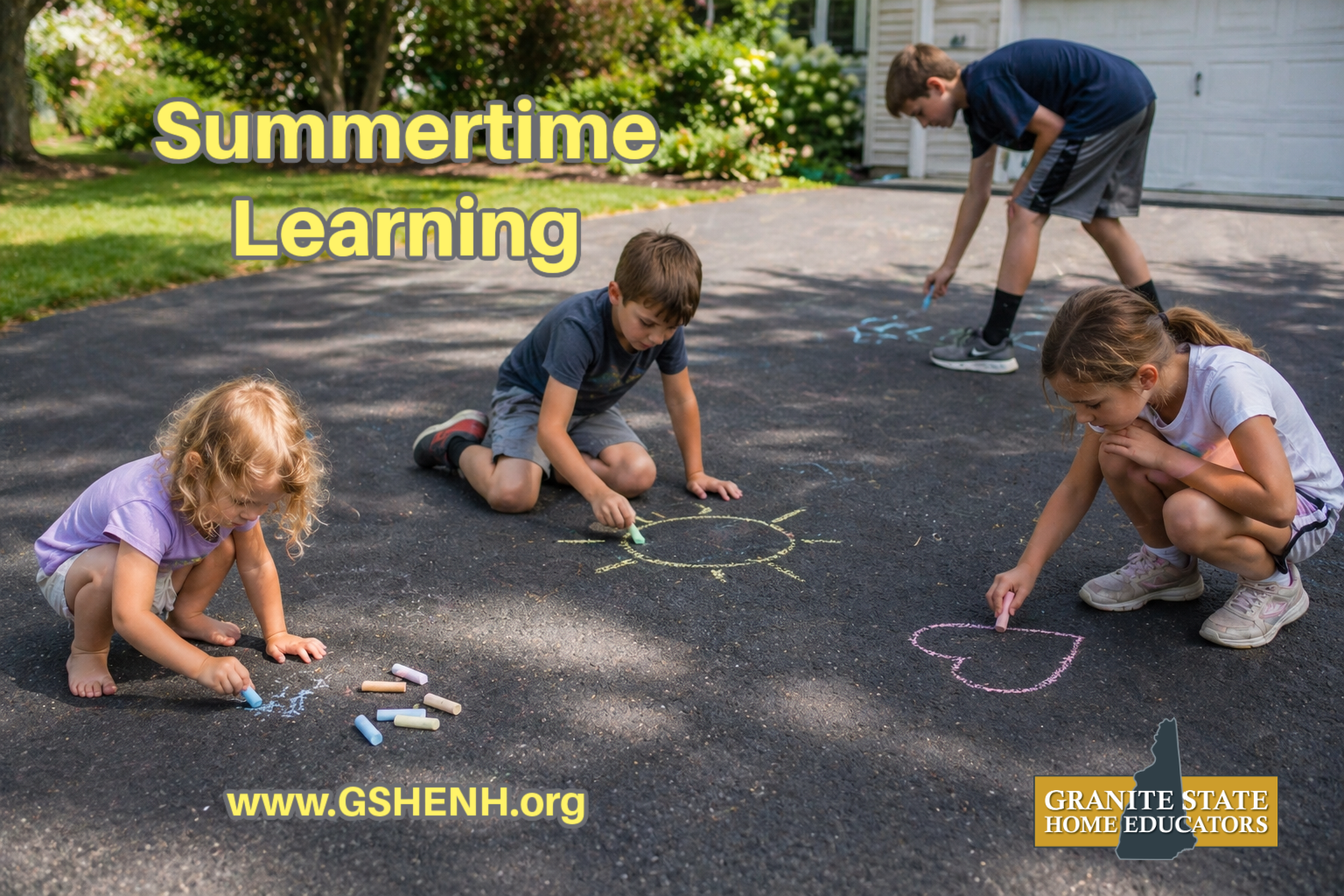
Summer is a perfect opportunity to lean into organic learning—where curiosity leads, and learning follows naturally.
For many families, the shift into summer brings a welcome change of pace. Schedules loosen, routines soften, and there is finally room to breathe after a full year of commitments and structure.
It’s worth saying at the outset: summer does not need to be optimized.
It doesn’t need to be filled with plans or shaped into something that looks like the rest of the year. Time spent playing outside, visiting with friends, traveling, or simply having unstructured days at home has real value. Children benefit from rest. They benefit from boredom. They benefit from time that isn’t directed toward a specific outcome. Parents do, too.
For some families, summer may be a complete break from anything resembling formal learning. For others, it may include a few intentional activities woven into a relaxed rhythm. Most fall somewhere in between. All of these approaches are valid.
What changes in the summer isn’t whether learning happens—it’s how it shows up.
When structure recedes, learning becomes more embedded in everyday life. It appears through experience rather than assignment. Measuring ingredients, asking questions, figuring something out, making a plan, adjusting when it doesn’t work—these are all forms of learning. They simply don’t announce themselves as subjects or lessons.
If a child is engaged, thinking, exploring, and asking questions, learning is taking place.
Within that kind of environment, learning often grows out of what families are already doing.
Time spent exploring local places, for example, can naturally lead to deeper understanding. A visit to Strawbery Banke Museum or Canterbury Shaker Village invites questions about how people lived, how communities functioned, and how daily life has changed over time. Even seeking out covered bridges across New Hampshire can spark curiosity about design, materials, and history in a way that feels immediate and tangible.
Hands-on activities offer another natural extension. Cooking brings together measurement, timing, and process in a meaningful way. Experimenting with something like homemade ice cream adds creativity and trial and error. Gardening, building, or crafting projects all provide similar opportunities—learning that develops through doing, adjusting, and trying again.
Time outdoors creates space for a different kind of attention. A walk, a trail, or even time in the backyard can lead to noticing patterns, observing changes, and asking questions that don’t have immediate answers. Some families choose to document what they see, while others simply observe and talk. Both approaches support the same underlying skill: learning to pay attention.
Summer can also make room for interests that don’t always fit easily into a more structured season. A child who has been curious about theater, science, or a particular topic may have the time to explore it more fully—through a program, a project, or independent exploration. Not every interest needs to be developed, but when curiosity persists, having the time to follow it can be meaningful.
Even everyday responsibilities can become part of this process. Planning a family trip, for instance, involves mapping routes, estimating time, researching destinations, and making decisions together. These experiences build practical skills without needing to be framed as lessons.
None of this requires a heavy structure. For families who prefer some rhythm, a light framework can be helpful—a few planned activities balanced with open time—but it doesn’t need to be elaborate or consistent week to week. Some weeks may be active, others quiet.
In fact, the quieter stretches are often just as important.
Downtime, boredom, and unstructured time create space for creativity, deeper play, and unexpected interests. They allow children to reset and to engage with the world on their own terms. They also give parents the opportunity to step back from directing and instead observe, respond, and support when it’s needed.
Because of that, learning in the summer may not always look obvious. It may not produce something measurable or easily defined. But it often shows up in other ways—through sustained attention, curiosity, initiative, and the ability to make connections.
Summer doesn’t interrupt learning. It changes its form.
With more time and flexibility, children have the opportunity to explore more deeply, connect ideas more naturally, and develop a greater sense of independence. Whether a summer is full of activity, mostly unstructured, or somewhere in between, it can still be rich with growth.
There is no single right way to approach it—only what works for your family in this season.
And sometimes, the most valuable thing summer offers is simply the space to let learning breathe.
